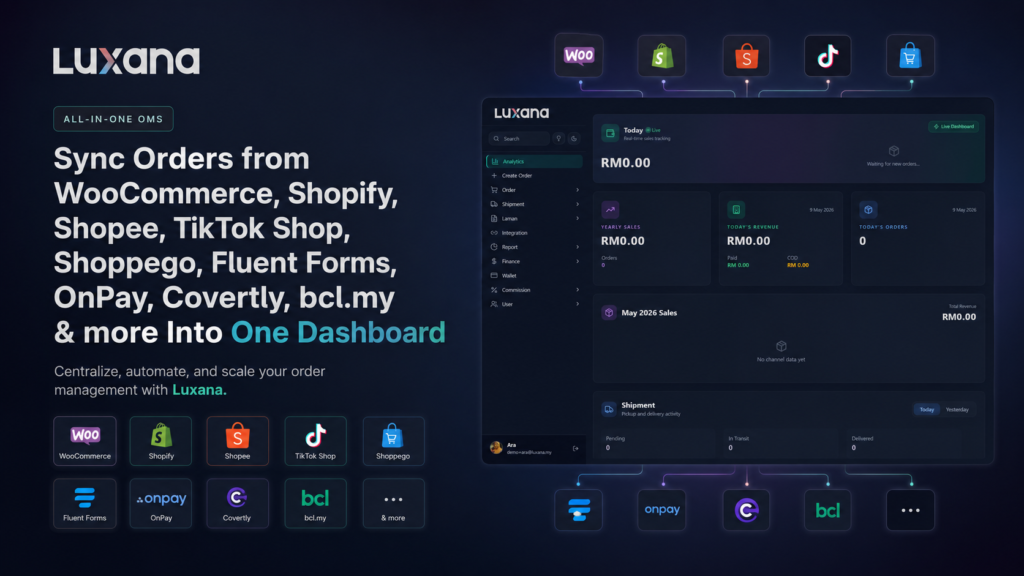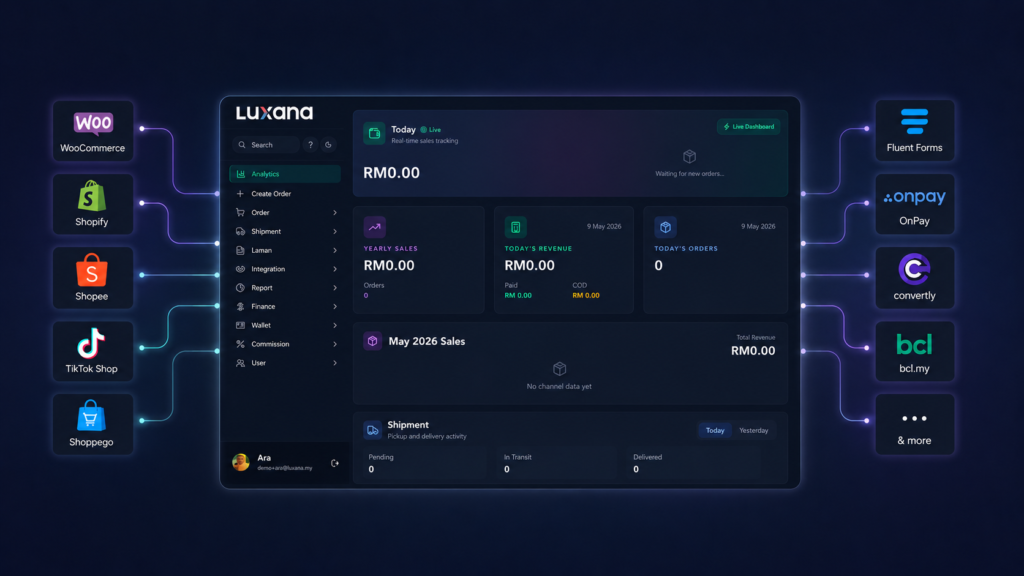
Sync Orders from WooCommerce, Shopify, Shopee, TikTok Shop, Shoppego, Fluent Forms, OnPay, Convertly, bcl. my & more Into One Dashboard
Running an e-commerce business today often means selling across multiple platforms at the same time. Many sellers use WooCommerce for their website, Shopify for branding, Shopee for marketplace traffic, and TikTok Shop for live selling and viral product discovery.
At first, this feels exciting.
But once orders start coming in from different channels, operations can quickly become messy.
You check Shopee for new orders.
Then TikTok Shop.
Then your website.
Then Shopify.
Suddenly:
- tracking numbers are sent late
- orders are missed
- inventory becomes inaccurate
- customers receive wrong updates
- staff start copy-pasting information manually
This is where centralized order management becomes important.
Why Managing Multiple Sales Channels Manually Becomes a Problem
Most e-commerce businesses start with manual workflows.
A seller may only receive 5–10 orders daily in the beginning, so checking every platform manually still feels manageable.
However, once the business scales, the cracks start to appear.
Common Problems Multi-Channel Sellers Face
1. Orders Are Scattered Everywhere
Each platform has its own dashboard:
- WooCommerce
- Shopify
- Shopee Seller Centre
- TikTok Shop Seller Centre
- Shoppego
- Fluent Forms
- OnPay
- Convertly
- bcl. my
- many more
This forces your team to constantly switch tabs and systems throughout the day.
Not only is this inefficient, but it also increases the risk of missing important updates.
2. Inventory Does Not Sync Properly
One of the biggest operational nightmares in e-commerce is overselling.
Example:
- A customer buys Product A from Shopee
- Another customer buys the same item from Shopify
- Inventory was not updated fast enough
- You accidentally sell stock you no longer have
This creates:
- refund requests
- delayed shipments
- customer dissatisfaction
- negative reviews
3. Manual Tracking Updates Waste Time
Many sellers still:
- copy tracking numbers manually
- send WhatsApp updates one-by-one
- update statuses across multiple systems
This becomes exhausting when order volume increases.
4. Human Errors Increase
The more manual work involved, the higher the chance of mistakes:
- wrong parcel labels
- missed orders
- incorrect stock counts
- duplicate shipments
- forgotten customer updates
Small errors eventually become expensive problems.
What Is a Centralized Order Dashboard?
A centralized order dashboard allows sellers to manage orders from multiple platforms in one place.
Instead of checking four different systems separately, all orders appear inside a single dashboard.
This means you can:
- view all incoming orders together
- manage fulfillment faster
- sync inventory across platforms
- reduce manual tasks
- improve operational efficiency
For growing e-commerce businesses, this becomes extremely important.
How Luxana OMS Helps Sync Orders Across Multiple Platforms
Luxana OMS helps ecommerce sellers centralize operations by syncing orders from platforms like:
- WooCommerce
- Shopify
- Shopee
- TikTok Shop
- Shoppego
- Fluent Forms
- OnPay
- Convertly
- bcl. my
- Many more online platforms
into a single dashboard.
Instead of jumping between tabs all day, sellers can manage operations from one system. Especially for online sellers/ e-commerce business owner based in Malaysia, finding a good Malaysian OMS (order management system in Malaysia) is crucial while scaling your business.
1. Unified Multi-Channel Dashboard
All incoming orders can be viewed in one centralized interface.
This gives businesses:
- better visibility
- faster processing
- simplified workflows
- easier team management
Your team no longer needs to memorize different operational flows for every platform.
2. Inventory Sync Across Platforms
Inventory synchronization helps reduce overselling issues.
When stock changes on one platform, inventory can be updated across connected channels.
This is especially important for:
- fast-moving products
- live selling
- limited stock items
- seasonal campaigns
For businesses selling on both marketplaces and websites, inventory synchronization can significantly reduce operational headaches.
3. Faster Order Fulfillment
Managing fulfillment from one dashboard speeds up packing and shipping processes.
Instead of opening multiple seller centers:
- orders are consolidated
- fulfillment becomes more organized
- workflows become easier to standardize
This is especially useful for businesses processing:
- daily bulk orders
- live stream orders
- campaign traffic spikes
These automated processes by Luxana is as close to automatic airwaybill as we can get. (Auto airwaybill FTW, anyone?😆)
4. Reduced Human Error
Automation reduces repetitive manual work.
This helps minimize:
- copy-paste mistakes
- forgotten tracking updates
- duplicate order handling
- shipping errors
Reducing human error is about saving time and it also protects customer trust.
5. Better Scalability
Many e-commerce businesses struggle when they start growing because their operations were built around manual processes.
A centralized OMS helps businesses scale more sustainably by creating standardized workflows.
Instead of hiring more people to manage operational chaos, businesses can improve efficiency through automation and centralization.
Why Multi-Channel Selling Is Growing Rapidly
Modern e-commerce customers buy from many different platforms depending on convenience.
Some customers prefer:
- Shopee for vouchers
- TikTok Shop for live deals
- Shopify stores for branding
- WooCommerce stores for niche products
- and many other platforms for many other reasons.
Because of this, many brands no longer rely on a single sales channel.
However, multi-channel selling also increases operational complexity.
Without proper systems in place, growth can become overwhelming instead of exciting.
Signs Your Business Needs an OMS
You may need an Order Management System if:
- your team constantly switches between dashboards
- stock counts are often inaccurate
- tracking numbers are updated manually
- customers complain about delayed updates
- overselling happens frequently
- fulfillment feels chaotic during campaigns
- operations become stressful during high order volume
These are common signs that manual workflows are reaching their limits.
WooCommerce, Shopify, Shopee, TikTok Shop, Shoppego, Fluent Forms, OnPay, Convertly, bcl. my& more in One Dashboard
As e-commerce continues evolving, businesses need systems that can simplify operations instead of adding more complexity.
Managing orders from WooCommerce, Shopify, Shopee, and TikTok Shop separately may work temporarily — but as order volume grows, centralized management becomes increasingly important.
Using a unified dashboard helps businesses:
- save time
- reduce errors
- improve fulfillment workflows
- manage inventory better
- create smoother customer experiences
For sellers looking to streamline e-commerce operations, centralized order management can become a major operational advantage. Learn more about multi-channel ecommerce automation with Luxana OMS.